From Iron Boxes to Smart ODF: The Evolution of Fiber Distribution Cabinets
By Jergeo Engineering Team | Published May 2026 · 8 min read

Fiber distribution cabinets started as simple iron boxes housing copper connections in the telecom era. As networks migrated from copper to fiber, the enclosures that manage those connections had to evolve in materials, density, and intelligence. Below is that evolution, and what it means for buyers specifying equipment today.
Summary
Fiber distribution cabinets evolved from 144-port metal enclosures to 1152-port SMC modular designs with drawer-type splice trays, enabling phased FTTH deployment without replacing existing cabinets.
The copper era: heavy iron, low density
In the copper era, distribution cabinets were straightforward: thick steel enclosures housing MDF (Main Distribution Frame) blocks. Each copper pair needed its own terminal, and the cabinets were large, heavy, and purely mechanical. There was no concept of optical loss, no bend radius concerns, and no need for precision alignment. The cabinets were built to protect copper from weather and tampering — nothing more.
The fiber transition: new rules, new materials
When fiber replaced copper in the access network, the requirements changed fundamentally. Fiber is fragile — it breaks at small bend radii, it degrades with contamination, and its performance depends on precise connector alignment. Distribution cabinets had to evolve in three ways:
- Materials: SMC (Sheet Molding Compound) replaced painted steel for outdoor cabinets. SMC is lighter, corrosion-proof, and provides better thermal insulation than metal — important for protecting fiber splices from temperature extremes.
- Internal structure: Drawer-type and flip-up splice trays replaced fixed terminal blocks. These trays manage fiber bend radius and provide organized routing — something copper cabinets never needed.
- Sealing: IP65 became the standard for outdoor cabinets. Cable entries use worm-gear clamps and fireproofing mud to maintain seal integrity around dozens of fiber cables.
The density era: ODF and patch panels
As fiber deployment scaled from hundreds to thousands of connections per node, outdoor cabinets alone could not provide enough density. Optical Distribution Frames (ODFs) were developed for indoor environments — central offices, data centers, equipment rooms — where weather protection is not needed but high-density fiber management is.
Modern ODFs like the Jergeo JODF-C2 hold up to 1440 ports in a single 42U frame. This density is achieved through integrated splice-and-distribution modules that combine splice tray, fiber routing, and adapter panel into a single 12-fiber unit. The result: more connections in less space, with organized routing that prevents the fiber tangle that plagued earlier installations.
The AI era: smart monitoring and data-driven management
The latest evolution adds electronic intelligence to what was traditionally passive infrastructure. Smart ODFs include RFID tags on each port, LED-guided patching, and real-time monitoring that tracks which ports are occupied, which fibers are active, and where connections should be made. This intelligence reduces human error in patching — a major source of network outages — and provides electronic records for audit and compliance.
For AI data centers, this evolution is particularly relevant. GPU cluster topologies change frequently, and every re-patching operation is a potential source of error. Smart ODF guidance reduces the risk of mispatching in high-density environments where a single wrong connection can take down a training job.
What this means for buyers
When specifying fiber distribution equipment today, consider where your project sits on the evolution curve:
- Basic outdoor FTTH: SMC FDC with drawer-type trays, IP65. Proven, reliable, cost-effective.
- High-density indoor: ODF with integrated modules, 432-1440 ports. For central offices and data centers.
- AI data center: High-density patch panel with sliding/rotary access, MPO compatibility, optional smart monitoring. Designed for frequent reconfiguration.
Related Products
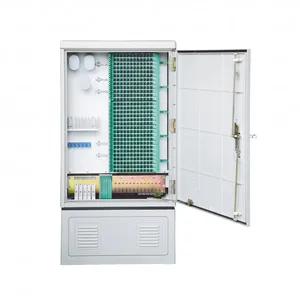
JFDC-288A Fiber Distribution Cabinet
288 ports FDC with wall/pole mounting options
View Product →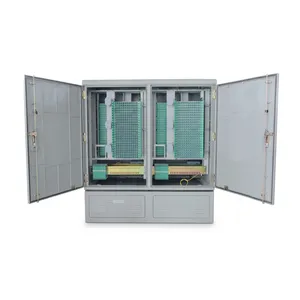
JFDC-1152A Fiber Distribution Cabinet
High-capacity 1152 ports fiber distribution cabinet with SMC material
View Product →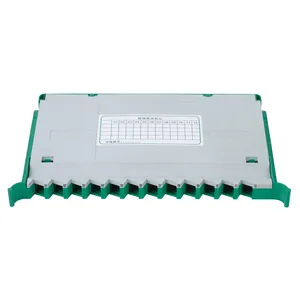
JSDM-A1 Splice & Distribution Module
12 ports splice module with middle layer
View Product →References
- Lightwave — optical communications industry technology trends and analysis
- The Fiber Optic Association (FOA) — fiber optic infrastructure reference and standards overview
Key takeaway
Fiber distribution equipment has evolved from simple iron boxes to intelligent, high-density systems. Choose the generation that matches your deployment: SMC FDC for outdoor FTTH, high-density ODF for central offices, and AI-ready patch panels with MPO support for data center GPU clusters.