Fiber Optic Accessories
The small parts that hold the network together — adapter holders, cable rings, splice frames, insulating plugs, and cable tools.
Every FDC, splice closure, ODF, and patch panel relies on a set of internal plastic and metal accessories to function. The enclosure is the shell. The accessories are the internals — the adapter holders that position fiber connectors, the cable management rings that route patch cords without crushing them, the splice tray frames that organize fusion splices, and the insulating plugs that seal cable entry points against water and dust. Order an FDC without specifying the correct adapter holders and you cannot terminate fibers. Install cable management rings in the wrong position and your patch cords exceed the 30mm minimum bend radius. These are not afterthoughts — they are the parts that determine whether your fiber installation works or does not.
Jergeo manufactures a complete range of ODN plastic accessories: adapter holders (JKT series), optical connector holders (JTC series), cable management rings and spools (JXH and JXT series), splice tray frames (JZRK series), direct splice trays (JZR series), insulating plugs (JJY series), heat-shrink splice protectors (JRS series), and fiber optic strippers (JKB series). All products are injection-molded from ABS or PC material and are compatible with Jergeo enclosures as well as standard third-party ODN cabinets.
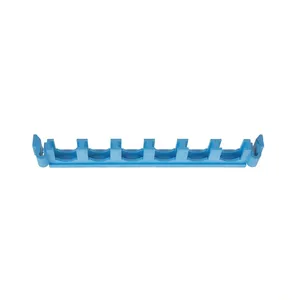
JKT-A 6-Position Adapter Holder
6-position adapter holder for SC duplex adapters. Flame-retardant ABS, for FDBs and OTBs. Fiber optic accessories. Direct manufacturer, MOQ from 1.
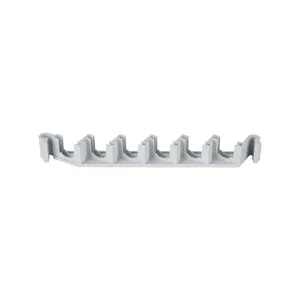
JKT-B 6-Position Adapter Holder
6-position adapter holder for LC duplex and FC adapters. Flame-retardant ABS, for FDBs and OTBs. Fiber optic accessories. Direct manufacturer, MOQ from 1.
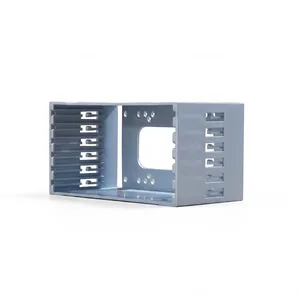
JZRK-A 6-Position Splice Tray Frame
6-position metal splice tray frame for ODFs and FDCs. Zinc-plated steel, holds standard splice trays. Fiber optic accessories. Direct manufacturer, MOQ from 1.
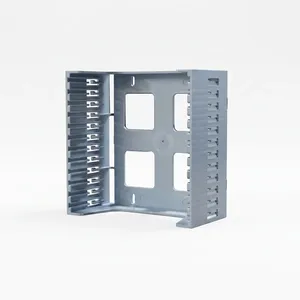
JZRK-B 12-Position Splice Tray Frame
12-position metal splice tray frame for large ODFs and FDCs. Zinc-plated steel. Fiber optic accessories. Direct manufacturer, MOQ from 1.
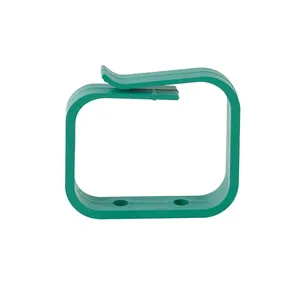
JXH-A Cable Management Ring
Open-side cable management ring for horizontal routing. ABS/PP, green, routes 6–12 patch cords. Fiber optic accessories. Direct manufacturer, MOQ from 1.
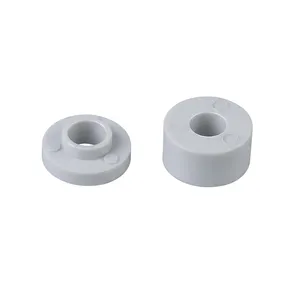
JJY-A Insulating Plug
M6 insulating plug for cable entry seal. EPDM/NBR rubber, oil-resistant, UV-stable. Fiber optic accessories. Direct manufacturer, MOQ from 1.
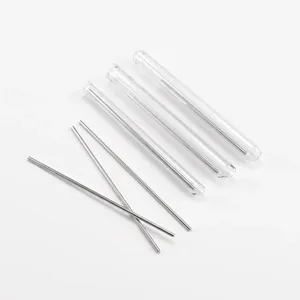
JRS-A Heat-Shrink Splice Protector
Heat-shrink splice protector for fusion splices. Polyolefin with stainless steel rod. Fiber optic accessories. Direct manufacturer, MOQ from 1.

JKB-A Fiber Optic Stripper
Precision fiber optic cable stripping tool. 250um/900um/2.0-3.0mm openings, replaceable blades. Fiber optic accessories. Direct manufacturer, MOQ from 1.
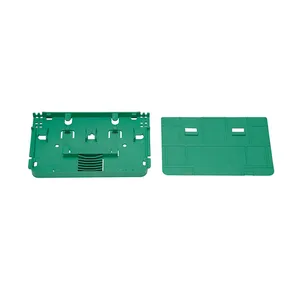
JZR-A Direct Splice Tray
12-core direct splice tray for splicing-only applications. ABS, 160×100×12mm, 30mm min bend radius. Fiber optic accessories. Direct manufacturer, MOQ from 1.
Your Fiber Termination Is Only as Good as the Adapter Holder That Positions It
The Link Between Splice and Patch
An adapter holder (also called an adapter strip or adapter bracket) is the plastic or metal strip that snaps into the front panel of an FDB, OTB, or patch panel and holds the fiber optic adapters (SC, LC, FC) in place. Without the adapter holder, there is no way to mount the adapters — and without adapters, there is no way to connect patch cords to the spliced fibers.
JKT-A vs JKT-B — what is the difference? Both are 6-position adapter holders with identical external dimensions (L 150.1 x W 17.5 x H 17.5mm). The difference is in the adapter type they accept:
| Model | Adapter Type | Common Application |
|---|---|---|
| JKT-A | SC duplex | Standard FDBs and OTBs — SC is the most common connector in FTTH |
| JKT-B | LC duplex or FC | Higher-density FDBs (LC) or legacy telecom (FC) |
When ordering replacement adapter holders, you must specify the adapter type. An SC adapter holder cannot accept LC adapters — the cutout dimensions are different. If you mix them up, the adapters will not snap in.
48-position adapter holders: Used in high-port-count FDBs (e.g., JFDB-96A with 2 x 48 = 96 ports). These are wider strips designed to span the full width of the FDB front panel. They accept FC, SC, or LC adapters depending on the cutout configuration ordered.
A Cable Management Ring Is Not Decoration
It Prevents Macro-Bend Loss, Cable Tangle, and Maintenance Nightmare
Fiber optic cable has a minimum bend radius of 30mm for G.652D single-mode fiber. When patch cords are routed inside an ODF, FDC, or patch panel without cable management, they hang freely, cross over each other, and bend at random angles. The result: macro-bend loss at every unmanaged bend, tangled cables that make it impossible to trace a specific fiber, and a maintenance nightmare when a technician has to replace one patch cord among 96 unmanaged cables.
Ring vs Spool — two routing philosophies: A cable management ring (JXH series) routes individual patch cords or small bundles along a specific path — from adapter panel to splice tray, or along a horizontal cable channel. A cable management spool (JXT series) is a central routing point — fibers wrap around the spool to change direction or reach adapter panels on both sides of the ODF. Rings are point-to-point. Spools are centralized.
| Model | Dimensions | Style | Application |
|---|---|---|---|
| JXH-A | H 48 x W 56mm | Open-side, green | 6-12 patch cords, horizontal routing |
| JXH-B | H 45 x W 68mm | Double-C, white | Vertical cable routing |
| JXH-C | H 41 x W 28mm | With base, gray | Compact horizontal routing |
| JXH-D | H 79 x W 80mm | With base, gray | Large cable bundles, main entry routing |
| JXH-E | H 30 x W 5.8mm | Small C-type, white | Single bare fiber routing |
The sizing rule: Use the smallest ring that accommodates the cable bundle without compression. A ring that is too small causes over-compression and macro-bend loss. A ring that is too large wastes internal space and allows the cables to shift. The correct ring size is the smallest one that fits.
The Plug That Stops Water at the Cable Entry
Insulating Plugs Are the Last Line of Defense Against Environmental Ingress
Every cable entry point on an FDC, FDB, FSC, or OTB is a potential leak path for water, dust, and insects. The insulating plug (also called a cable gland seal or cable entry seal) is the component that seals around the cable at the entry point. Without it — or with the wrong size plug — the enclosure's IP rating is compromised, and water ingress causes connector corrosion and fiber degradation.
How insulating plugs work: The plug has a rubber body with a central hole that matches the cable diameter. The plug threads into the cable entry port on the enclosure (M4, M5, M6, or M8 thread). When the cable is inserted through the plug and the plug is tightened, the rubber compresses around the cable, creating a watertight and dust-tight seal. Multiple cables can pass through a single plug if the plug has multiple holes (multi-hole plugs).
Why plug size matters: The plug must match both the thread size of the cable entry port AND the cable diameter. A plug that is too large for the cable will not compress enough to seal. A plug that is too small will not fit the thread. Always measure the cable diameter at the entry point and select the matching plug.
| Model | Dimensions | Thread | Application |
|---|---|---|---|
| JJY-A | H 13.5 / D 16mm | M6 | Standard cable entry seal |
| JJY-B | H 10 / D 15.5mm | M8 | Large cable entry seal |
| JJY-C | H 10 / D 15mm | M5 | Small cable entry seal |
| JJY-D | H 10 / D 15mm | M6 | Cable entry seal (alternate) |
| JJY-E | H 8 / D 12mm | M4 | Smallest cable entry seal |
| JJY-F | H 15.5 / D 12mm | M4 | Extended seal for thick walls |
All Jergeo insulating plugs are made from EPDM or NBR rubber — oil-resistant, UV-stable, and rated for continuous operation from -40 to +85 C. They are included as standard accessories with every Jergeo enclosure.
Related Solutions
See how adapter holders and accessories complete ODN installations
Explore FTTH Network Solution