Fiber infrastructure that scales with your compute — including AI
From GPU cluster interconnects to MDA core cabling to 400G MPO migration. High-density, pre-terminated, and modular — built for the speed and scale that modern data centers and AI workloads demand.
Core Room Fiber Cabling
The MDA is the backbone of your data center network. Traditional 1U panels holding 12–24 LC ports cannot keep up with 40G/100G/400G density. This solution delivers MPO-based high-density cabling, organized patch management, and optional smart monitoring.
MDA → IDA → HDA → EDA architecture
What this solves
High-Density MPO Pre-terminated Cabling
MPO is the standard for 40G/100G/400G. But polarity management, end-face cleaning, and LC-MPO coexistence trip up even experienced teams. This solution provides clear polarity guidelines, factory-tested components, and a complete trunk-to-fanout product chain.
Polarity: use Method B
Method B (full key reversal) is recommended because both ends use identical products — no A/B side confusion, simpler inventory, and fully TIA-568.3-D compliant.
Connector performance comparison
| Type | Insertion Loss | Return Loss | Speed | Cores/Module |
|---|---|---|---|---|
| MPO-12 | ≤0.25dB | ≥50dB | 40G/100G | 12 |
| MPO-24 | ≤0.35dB | ≥50dB | 100G/400G | 24 |
| LC Duplex | ≤0.15dB | UPC≥50dB | 10G/25G | 2 |
Data Center Interconnect (DCI)
Same-city dual-active or cross-region disaster recovery — DCI links carry your most critical traffic. This solution provides SMC outdoor cabinets, IP68 splice closures, and multi-route redundancy for 99.99%+ link availability.
Multi-route redundancy design
DCI node configuration
| Node Type | Product | Key Spec |
|---|---|---|
| Outdoor Node | Outdoor Telecom Cabinet | IP65/IP66, SMC, 9U–42U |
| Distribution Point | Fiber Distribution Cabinet | 144–864 fibers, wall/floor mount |
| Splice Point | Fiber Splice Closure | 96–576 cores, IP68 |
| End Office | Optical Distribution Frame | 19" 1U–12U, LC/MPO mixed |
AI Data Center Fiber Management
AI training clusters connect hundreds of GPUs through high-density fiber interconnects. Each GPU node uses 8-16 fiber pairs. A single AI rack can need 96+ LC duplex ports. Traditional 12-24 port panels cannot keep up. High-density fiber patch panels and ODFs become critical infrastructure — and since they are made from sheet metal, not fiber, their cost is unaffected by fiber price surges.
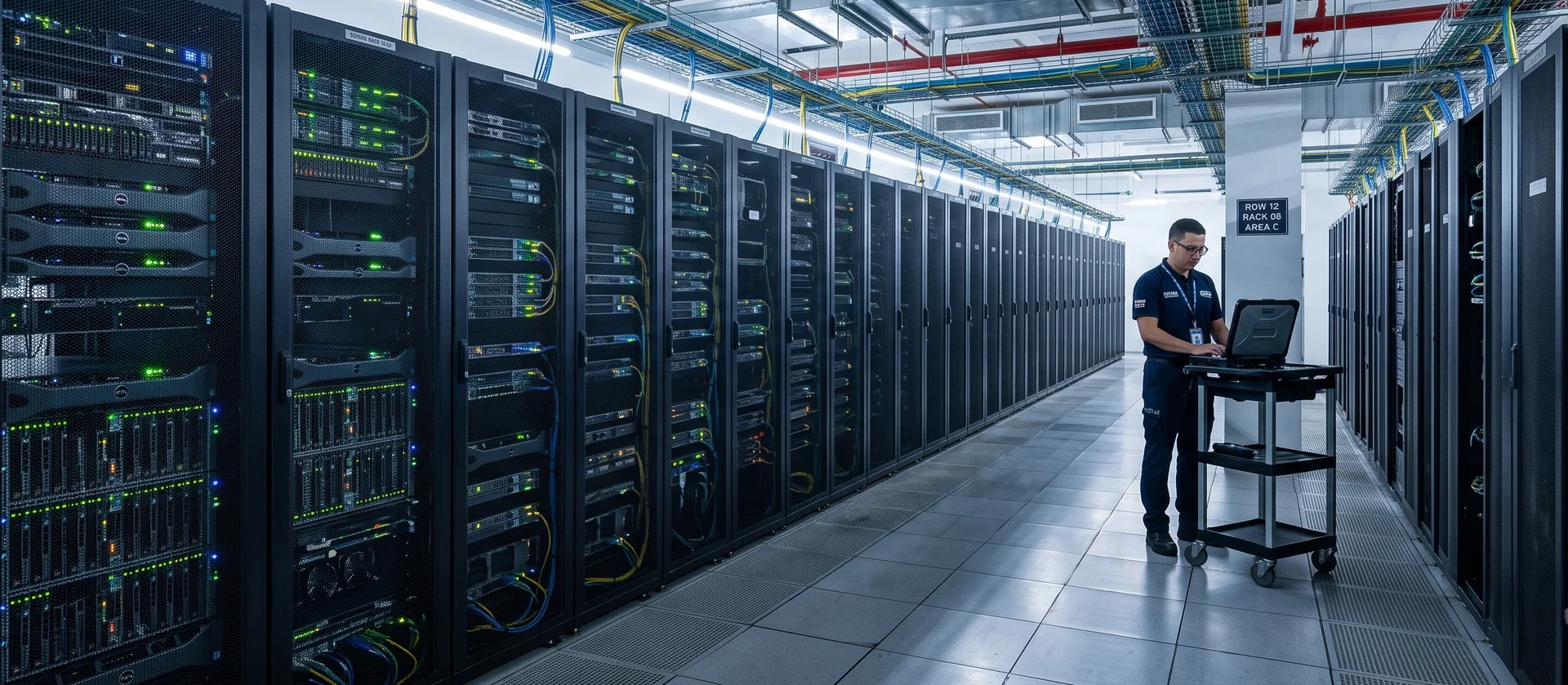
What this solves for AI data centers
Recommended products
JODF-U1 — Independent Wiring Channel Patch Panel
144 ports in 1U. Each module has its own fiber routing channel — when you re-patch port 96, you do not disturb ports 1-95. Critical when GPU cluster topologies change frequently during AI workload reconfiguration.
JODF-U2/U3 — Rotary & Sliding Access Patch Panel
Rotary design swings out 180 degrees. Sliding drawer extends from the front — no side clearance needed. Essential in AI data center hot aisles where rear access is blocked.
JODF-C2 — 1440-Port High-Density ODF
Standalone fiber distribution node at the MDA or IDA layer. 1440 ports in a single frame with center-bobbin fiber slack management. For AI data center core rooms where thousands of fibers converge.
AI vs. traditional data center: fiber density
| Parameter | Traditional DC | AI Data Center |
|---|---|---|
| Fiber ports per rack | 12-48 | 96-192 |
| Typical connector | LC duplex | MPO-12/MPO-24 + LC |
| Re-patch frequency | Monthly / quarterly | Weekly / per-workload |
| Panel access need | Standard front access | Sliding / rotary required |
| Airflow concern | Low | High (cable bulk blocks airflow) |
| Cost sensitivity to fiber price | Moderate | High — but patch panels are metal |
Planning a data center or AI cluster cabling upgrade?
Whether you are building an AI GPU cluster, migrating to 400G MPO, or designing a DCI backbone — share your current infrastructure and target architecture. We will specify the right product mix.