Fiber Splice Closure (FSC)
The invisible node — where two cables become one link, and the seal decides whether your splices survive the next decade.
A fiber splice closure (FSC) protects fusion splice points where two fiber optic cables are joined. That is its entire job — no splitters, no adapters, no cross-connects. Just a sealed enclosure that keeps water, dirt, and rodents away from the most vulnerable point in the network: the bare fusion splice.
FSCs are installed in places nobody wants to visit: up on aerial poles, inside underground manholes, buried directly in soil, or stuffed into ducts. If the seal fails, water gets in, and fusion splices degrade. There is no alarm, no warning light — just a slow increase in insertion loss that shows up as intermittent errors on the ONT, usually during rain.
Jergeo manufactures FSCs from 48 to 288 cores in PC (polycarbonate) and PP (polypropylene) shells. All models are IP68 rated — full submersion protection. Seal options include silicone rubber gaskets (PC models) and self-adhesive rubber strips (PP models), both field-resealable. Every model supports aerial, duct, and direct-burial installation. Splice trays stack vertically and slide out independently.
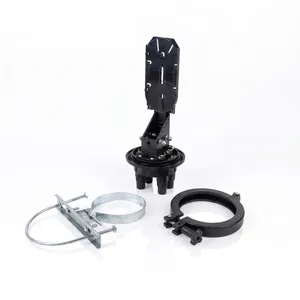
JFSC-L144A Horizontal Fiber Splice Closure
Horizontal fiber splice closure, 144 cores, PC material. IP68 rated, silicone rubber seal. Aerial, duct, and direct burial. Factory direct, OEM/ODM, MOQ from 1.
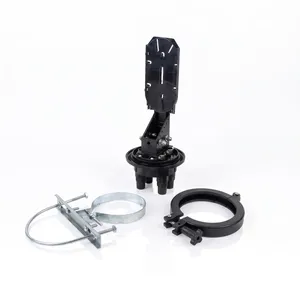
JFSC-L144B Horizontal Fiber Splice Closure
Horizontal fiber splice closure, 144 cores with 6 ports. PC shell, IP68, field-resealable. Aerial and underground. Factory direct, OEM/ODM, MOQ from 1.
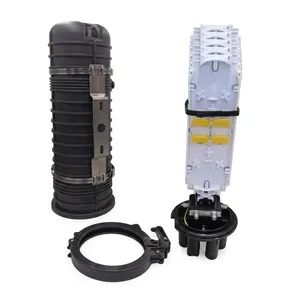
JFSC-L144C Horizontal Fiber Splice Closure
Horizontal fiber splice closure, 144 cores with melt glue sealing. PC, IP68. Aerial, duct, and direct burial. Factory direct, OEM/ODM, MOQ from 1.
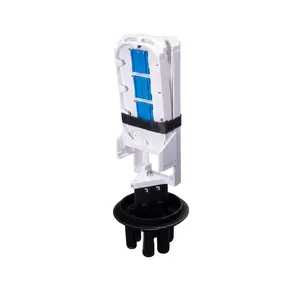
JFSC-L144E Horizontal Fiber Splice Closure
Horizontal fiber splice closure, 144 cores with self-adhesive rubber seal. PC, IP68. Aerial and underground. Factory direct, OEM/ODM, MOQ from 1.
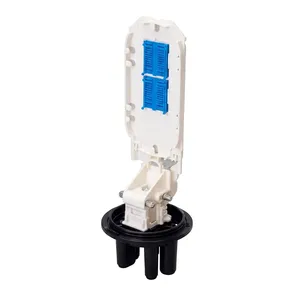
JFSC-L96A Horizontal Fiber Splice Closure
Compact horizontal fiber splice closure, 96 cores. PC material, IP68, silicone rubber seal. Aerial and underground. Factory direct, OEM/ODM, MOQ from 1.
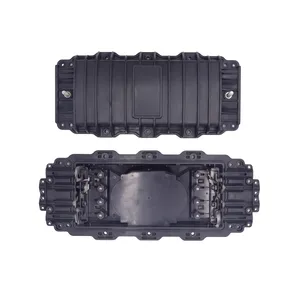
JFSC-T288A Vertical Fiber Splice Closure
High-capacity vertical fiber splice closure, 288 cores. PP shell, IP68, self-adhesive seal. Aerial, duct, and burial. Factory direct, OEM/ODM, MOQ from 1.
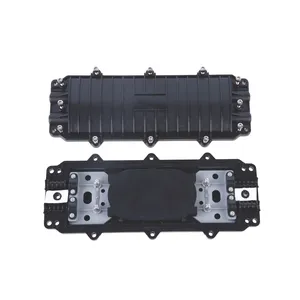
JFSC-T48A Vertical Fiber Splice Closure
Compact vertical fiber splice closure, 48 cores. PC material, IP68, silicone rubber seal. Aerial and underground. Factory direct, OEM/ODM, MOQ from 1.
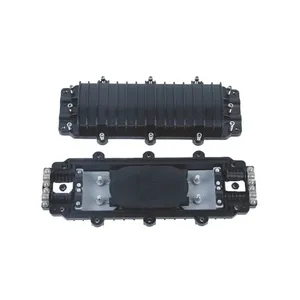
JFSC-T96A Vertical Fiber Splice Closure
Vertical fiber splice closure, 96 cores. PP, IP68, self-adhesive seal. Aerial and underground. Factory direct, OEM/ODM, MOQ from 1.
Two Shapes, Two Cable Routing Strategies
Dome vs. Inline — The Shape Is Not Cosmetic, It Determines Your Installation
Fiber splice closures come in two physical configurations, and the choice is not about preference — it is about how cables enter the closure and how fibers route to the splice trays.
Dome Closure (JFSC-L series)
Cables enter from the ends of the oval/dome shell. The closure opens by removing the dome lid — the base stays mounted. This is the classic design for aerial and underground splicing where the closure is mounted to a pole, strand, or bracket.
- More internal volume per core — more room for fiber routing and slack storage
- Multiple inlet ports: JFSC-L144B has 3/3, JFSC-L144C and L144E have 5–6 ports for branching
- Best for: Aerial and manhole installations where space allows, and branching configurations
Inline Closure (JFSC-T series)
Cables pass straight through the closure body in a single line. The closure opens by removing the center section or unclamping the halves. This is the design for pipeline and duct installations.
- Slimmer cross-section — JFSC-T288A is only 121mm tall
- Fits ducts and narrow handholes where a dome closure would not
- Best for: Duct and pipeline installations where cross-section is the binding constraint
The practical test:
Look at where the closure will sit. If it hangs on an aerial strand or sits in a manhole with room around it, use a dome closure. If it goes inside a duct or a narrow handhole, use an inline closure. If you need to route cables in from multiple directions, the dome closure with multiple inlet ports handles the branching naturally.
Polycarbonate or Polypropylene — The Real Question Is How Many Times You Need to Open It
PC vs. PP — The Shell Material Determines Your Seal Method and Re-Entry Strategy
Two shell materials, three seal methods. The combination determines how the closure performs over its service life and what happens when a technician needs to get back in.
PC (Polycarbonate) — JFSC-L144A/B, T48A, T96A
- Higher impact resistance. PC absorbs mechanical shock — drops, vibration on aerial poles, accidental impact — without cracking.
- Better transparency. The translucent shell lets technicians visually inspect splice tray positions without opening the closure — a real time-saver during troubleshooting.
- Seal method: Silicone rubber gaskets (L144A/B) or self-adhesive rubber strips (T48A/T96A).
- Re-entry: Silicone rubber gaskets can be reused 3–5 times before losing elasticity. Self-adhesive strips need replacement each time.
Best for:
Aerial installations, frequent re-entry expected, applications where visual inspection without opening saves time.
PP (Polypropylene) — JFSC-L144C/E, L96A, T288A
- Lighter than PC. JFSC-L96A (PP) weighs 1.3 kg vs. JFSC-T96A (PC) at 2.3 kg for the same core count.
- Lower material cost. PP closures are typically 15–25% less expensive than PC equivalents.
- Chemical resistance: PP resists acids, alkalis, and solvents better than PC — more durable in underground installations over 20 years.
- Seal method: Melt glue (L144C) or self-adhesive rubber (L144E, L96A, T288A). The T288A uses PP+GF for added rigidity.
- Caution: More brittle in cold temperatures — below -20°C, a dropped PP closure may crack where PC would only scuff.
Best for:
Underground manholes with chemical exposure, direct burial install-and-forget, high-core applications where weight matters.
Decision Matrix
| Scenario | Material | Seal | Why |
|---|---|---|---|
| Aerial, frequent re-entry | PC | Silicone rubber | Best impact resistance, easiest reseal |
| Underground, chemical exposure | PP | Self-adhesive | Better chemical resistance, lighter |
| Direct burial, install-and-forget | PP | Melt glue or self-adhesive | Lowest cost, permanent seal is fine |
| Duct, tight space, inline | PC or PP | Self-adhesive | Inline shape is the binding constraint |
| High-core (288), pipeline | PP+GF | Self-adhesive | Rigidity at high core count, lighter |
If Your Splice Closure Leaks, Nothing Else About It Matters
The Seal Is the Product — Why IP68 Is a Requirement, Not a Feature
Most field failures in fiber splice closures are seal failures, not material failures. The shell will outlast the network. The splice sleeves will outlast the shell. The seal is what fails — and when it fails, water enters the closure, corrodes the splice sleeves, and degrades the fusion splices.
IP68 vs. IP65 vs. IP67 — Why the Difference Matters
| Rating | Protection Level | Real-World Meaning for Closures |
|---|---|---|
| IP65 | Water jets | Splash resistance only — NOT sufficient for underground or flood-prone locations |
| IP67 | Temporary immersion (30 min at 1m) | Survives brief submersion — NOT rated for standing water in manholes |
| IP68 | Continuous submersion | Full submersion protection — rated for standing water, flooding, and wet soil |
All Jergeo FSCs carry IP68. This rating is achieved through three design elements:
1. Dual-seal geometry.
The cable entry ports use a two-layer seal: an inner rubber grommet that grips the cable sheath, and an outer clamp that compresses the grommet radially. This creates a seal that tightens as water pressure increases — the opposite of a simple O-ring, which can be pushed out of position by pressure differentials.
2. Seal material selection.
Silicone rubber (PC models) maintains elasticity across the full -40°C to +65°C range without hardening. Self-adhesive rubber (PP models) conforms to surface irregularities on the closure flange. Both materials are specified to maintain sealing properties for 20+ years in continuous outdoor exposure.
3. Cable entry sizing.
Every closure ships with multiple grommet sizes to match the cable diameter range. A grommet that does not match the cable diameter will not seal — this is the single most common installation error. If the cable is at the small end of the range, wrap the cable with sealing tape before inserting the grommet.
Re-entry seal integrity:
Silicone rubber gasket (JFSC-L144A/B): Inspect the gasket for cuts, nicks, or permanent deformation. If intact and still elastic, reuse it. If damaged, replace it — the gasket is a standard spare part. Re-clamp evenly, tightening opposite bolts in sequence to ensure uniform compression.
Self-adhesive rubber strip: The old strip must be completely removed and the flange cleaned before applying a new strip. Any residue creates a gap. Press the new strip firmly along the entire flange perimeter, overlapping at the ends. Takes 5–10 minutes, but skipping the cleaning step is the most common cause of re-seal failure.
Melt glue (JFSC-L144C): Heat the glue until it flows, then clamp while molten. The glue fills all surface irregularities as it cools. Most labor-intensive but creates the most robust permanent seal. Not recommended if you expect to re-enter more than once.
Related Solutions
See splice closure applications in outdoor fiber networks
Explore Outdoor Deployment Solution