How Fiber Price Surges Reshape Data Center Design
By Jergeo Engineering Team | Published June 2026 · 5 min read
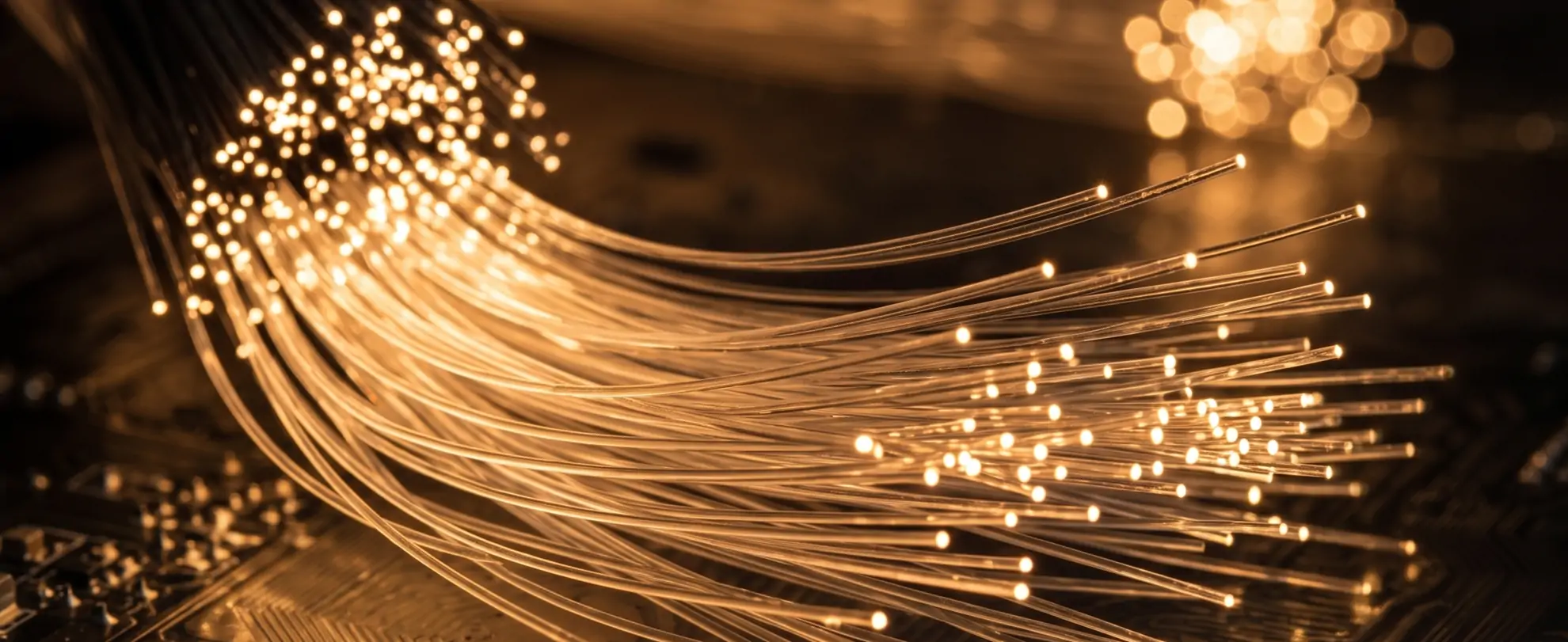
The global fiber optic cable market has seen extreme price increases. Since 2024, fiber prices have risen approximately 400%, as AI infrastructure demand takes a growing share of global fiber production capacity. This price shock is changing how data centers are designed and procured.
Summary
Rising fiber prices are pushing data center designers to optimize ODN layouts with higher-port-count ODFs and modular patch panels, reducing total fiber length while maintaining capacity.
The root cause: AI ate the fiber supply
AI training and inference clusters require massive fiber interconnects between GPU nodes, switches, and storage. A single hyperscale AI data center can consume more fiber than a mid-sized city's FTTH deployment. The major fiber manufacturers — primarily in China, the US, and Japan — have shifted production capacity toward meeting this demand, creating shortages in traditional telecom and enterprise segments.
The result: fiber cable that cost $0.10 per fiber-meter in early 2024 now costs $0.40-0.50 per fiber-meter in many markets. For a 10,000-fiber data center cabling project, that is the difference between a $1M cable budget and a $4-5M cable budget.
How data center designers are adapting
- Higher fiber count per cable: Instead of running multiple 12-fiber cables, designers specify 72-144 fiber trunk cables. This reduces the total cable meters needed per fiber connected, amortizing the price impact across more fibers.
- MPO pre-terminated cabling: MPO connectors carry 12-24 fibers per connection point, reducing the number of individual cable runs. Pre-terminated MPO trunks also reduce installation labor — a significant cost in high-wage markets.
- Deferred cabling: Some operators are cabling only the current phase and leaving future phases uncabled, betting that fiber prices will eventually stabilize. This creates demand for patch panels with flexible, modular adapter strips that can be reconfigured as cabling is added.
- Focus on fiber management hardware: While fiber cables are expensive and volatile, the metal infrastructure that manages them — patch panels, ODFs, cabinets — is not. Designers are investing in better fiber management to get more value from every fiber meter they deploy.
The sheet metal advantage
Fiber patch panels, ODFs, and network cabinets are made from cold-rolled steel, aluminum, or SMC composite. Their cost is driven by metal commodity prices, not optical fiber markets. While fiber prices surged 400%, steel prices have remained relatively stable, fluctuating within a normal range.
For procurement teams, this means:
- Predictable budgeting: Patch panel and ODF costs can be forecast accurately 6-12 months out, unlike fiber cable costs.
- No supply risk: Steel and aluminum are globally abundant commodities. There is no supply shortage risk for patch panel manufacturing.
- Margin preservation: For distributors and integrators, the metal components of a data center project carry healthy margins that are not being squeezed by raw material price spikes.
What this means for ODN equipment buyers
If you are procuring fiber infrastructure for a data center project, the current market conditions create a strategic opportunity. Invest in high-quality fiber management hardware — patch panels with independent wiring channels, sliding or rotary access, and MPO compatibility. These products have stable pricing and long service lives. They protect and organize the expensive fiber cables that run through them, making every expensive fiber meter count.
At Jergeo, all our patch panels and ODFs are manufactured from cold-rolled steel. Our pricing is based on sheet metal, machining, and surface treatment costs — not fiber. We provide 1-hour quotation response and MOQ from 1 unit, so you can order exactly what you need without overcommitting on inventory in an uncertain fiber market.
Related Products
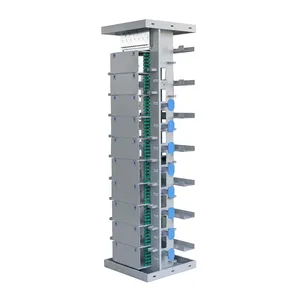
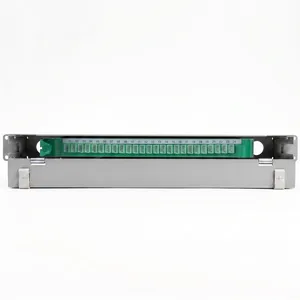
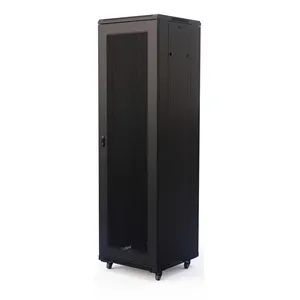
References
- CRU Group — optical fiber market price tracking and supply-demand analysis
- Light Reading — data center and fiber infrastructure industry coverage
Key takeaway
Fiber price surges are real and ongoing. Data center designers should invest in high-quality fiber management hardware with stable, predictable pricing. Patch panels and ODFs are the strategic safe harbor in a volatile fiber market — they cost what they cost, and they make every expensive fiber meter count.
Related products
Related Articles

AI Data Center Fiber Management
Why high-density fiber management is critical for AI GPU cluster interconnects.
Read Article →
MPO vs LC Patch Panel
Choosing the right patch panel to minimize fiber consumption during price surges.
Read Article →
Fiber Optic Patch Panel Guide
How to select high-density patch panels that reduce per-port fiber cost.
Read Article →