CCTV Camera Cabinet Selection Guide: Outdoor Surveillance Enclosures
By Jergeo Engineering Team | Published September 2026 · 8 min read
Every outdoor security camera needs more than the camera itself: the PoE switch, media converter, power supply, and terminations behind it must be protected from rain, dust, heat, and tampering. That protection is the job of a CCTV camera cabinet. This guide covers the four decisions that determine whether your surveillance enclosure survives its first season outdoors.
Summary
Choose a CCTV camera cabinet by matching four specs to your site: IP rating (IP55 for sheltered, IP65 for exposed), material (galvanized for economy, 304 stainless for corrosion-prone sites), mount type (wall/pole for single cameras, ground for multi-camera clusters), and internal size to fit your equipment.
What is a CCTV camera cabinet
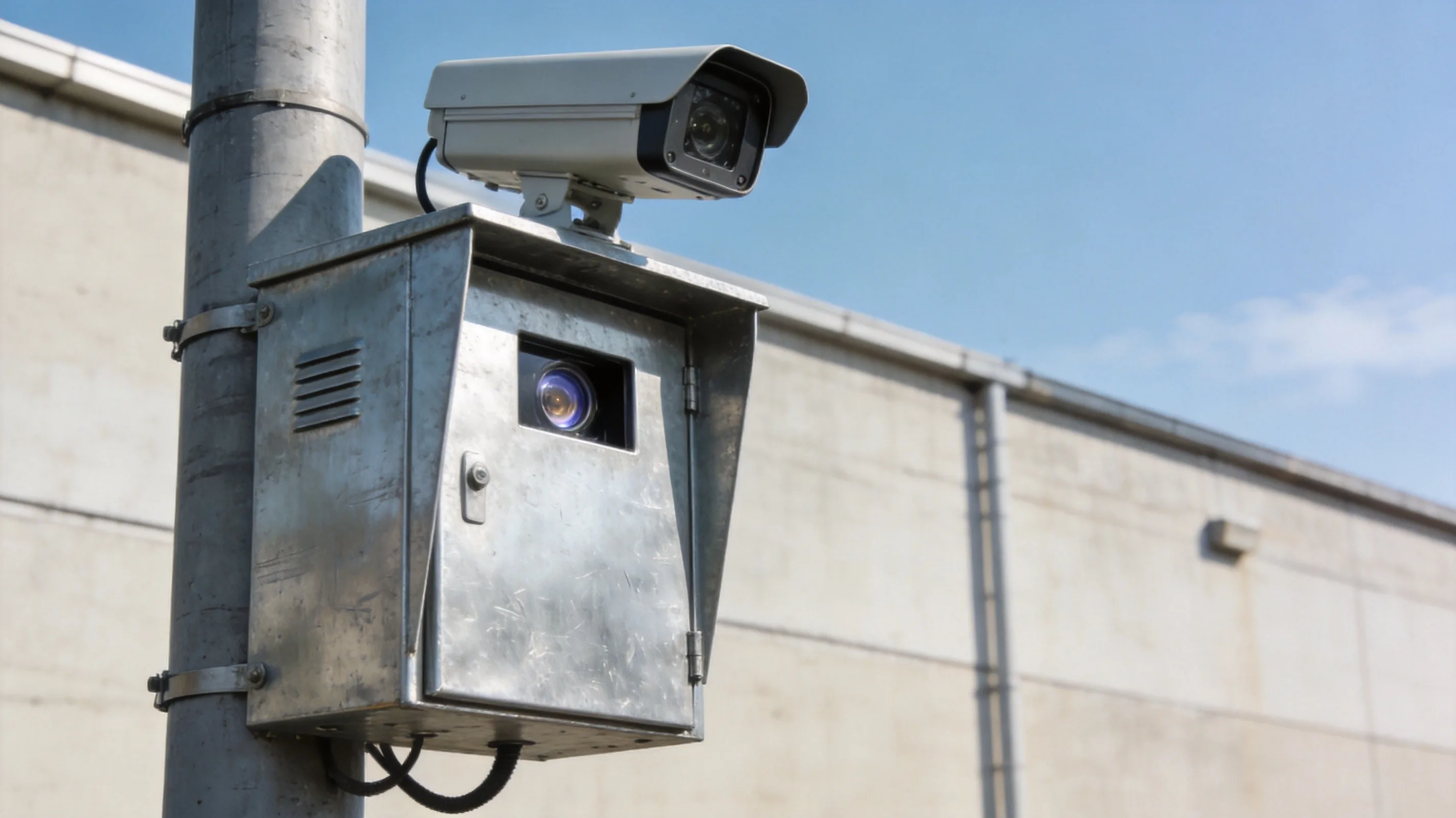
A CCTV camera cabinet — also called an outdoor surveillance cabinet or security camera enclosure — is a weatherproof metal box that houses the active electronics supporting an exterior security camera. The cameras themselves mount beside or above it; the cabinet protects the PoE switch, network switch, media converter, power supply, fiber terminator, and cabling from outdoor conditions and physical tampering. Key characteristics:
- IP rating: IP55 or IP65 dust and water protection for outdoor exposure
- Material: Galvanized steel or 304 stainless steel for corrosion resistance
- Mounting: Wall, pole, or ground mounting to fit the camera node
- Security: Lockable door to deter tampering with network and power gear
- Operating range: Wide temperature tolerance, typically -40°C to +85°C
Four decisions that determine the right cabinet
For any outdoor surveillance deployment, four specifications decide which cabinet fits. They are independent, so evaluate each against your specific site and camera density.
1. IP rating: match protection to exposure
The IP code (Ingress Protection) tells you resistance to dust and water. IP55 blocks dust and low-pressure water jets — adequate for sheltered wall and pole installations. IP65 is fully dust-tight and protected against higher-pressure water jets — the right choice for exposed sites, heavy rain, coastal spray, and direct weather. The Jergeo JMC-A Outdoor Surveillance Cabinet delivers IP55 for standard sheltered nodes, while the JMC-B provides IP65 in 304 stainless steel for demanding sites.
2. Material: galvanized vs stainless steel
Galvanized sheet steel — zinc-coated to shed rust (galvanization) — is the economical choice for most installations — it offers reliable corrosion resistance at an attractive cost and is ideal for general-purpose indoor-adjacent or sheltered outdoor nodes. 304 stainless steel is the premium option for coastal, marine, chemical, and high-humidity environments where corrosion resistance is critical. If your site is within sight of the sea or persistently damp, spend on stainless; otherwise galvanized performs well for a lower budget.
3. Mount type: wall, pole, or ground
Wall and pole mounts are compact cabinets fitted right beside cameras on building facades and poles, serving one to two camera nodes with a tight footprint. The Jergeo JMC-A (516×400×205mm) and JMC-B (600×400×350mm) fit these positions. Ground mounts are larger floor-standing units that house aggregated equipment for multiple cameras at a central site, such as the JMC-C (1350×670×550mm) and JMC-D (1200×640×645mm).
4. Internal size: fit the equipment, leave room
Size the cabinet for the actual gear inside — switches, converters, power, terminations — plus headroom for cable routing and future expansion. A single PoE switch with one camera fits a compact wall-mount unit. A cluster of cameras with an aggregated network switch and fiber termination needs a full ground-mount cabinet. Always count the rack space and vertical clearance your equipment needs before settling on a size.
Side-by-side comparison
| Parameter | JMC-A | JMC-B | JMC-C | JMC-D |
|---|---|---|---|---|
| Mounting | Wall/Pole | Wall/Pole | Ground | Ground |
| Material | Galvanized | 304 Stainless | Galvanized | Galvanized |
| IP rating | IP55 | IP65 | IP55 | IP65 |
| Dimensions | 516×400×205mm | 600×400×350mm | 1350×670×550mm | 1200×640×645mm |
| Best for | Single camera node | Corrosion-prone site | Multi-camera cluster | Aggregated IP65 site |
Step-by-step selection checklist
- Map your camera nodes: list each outdoor camera and the equipment it needs, and group nearby cameras that can share one cabinet
- Assess exposure: sheltered wall/pole → IP55; exposed/coastal/heavy rain → IP65
- Choose material by environment: galvanized for general sites, 304 stainless for salt/corrosion-prone areas
- Match mount to density: wall/pole for 1–2 cameras, ground-mount for multi-camera aggregated clusters
- Size with headroom: fit the switch, converter, power, and termination with room for cable routing and expansion
Compatibility with network and fiber equipment
A surveillance cabinet is not an ODN product — it does not terminate or distribute fiber. But it often protects the same fiber patch cables and converters that connect remote sites back to the network core. Inside the cabinet you typically mount a PoE or network switch, media converter, power distribution, and fiber terminator, with weatherproof cable glands on the entry points. If the camera backhaul runs over fiber, keep the fiber bend radius inside the cabinet and leave slack for re-termination. For the fiber management side of outdoor nodes, pair the cabinet with an outdoor optical terminal box if the site terminates drop fibers.
Related Products
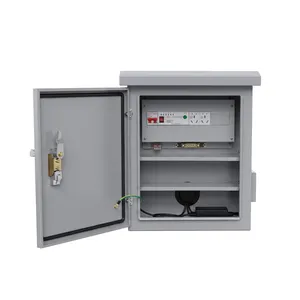
JMC-A Outdoor Surveillance Cabinet
IP55 galvanized wall/pole cabinet for single camera nodes
View Product →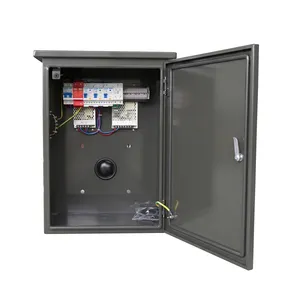
JMC-B Outdoor Surveillance Cabinet
IP65 304 stainless cabinet for corrosion-prone outdoor sites
View Product → Surveillance Cabinet Range
All Jergeo outdoor surveillance cabinets, wall to ground mount
View Category →Related categories
Related Articles
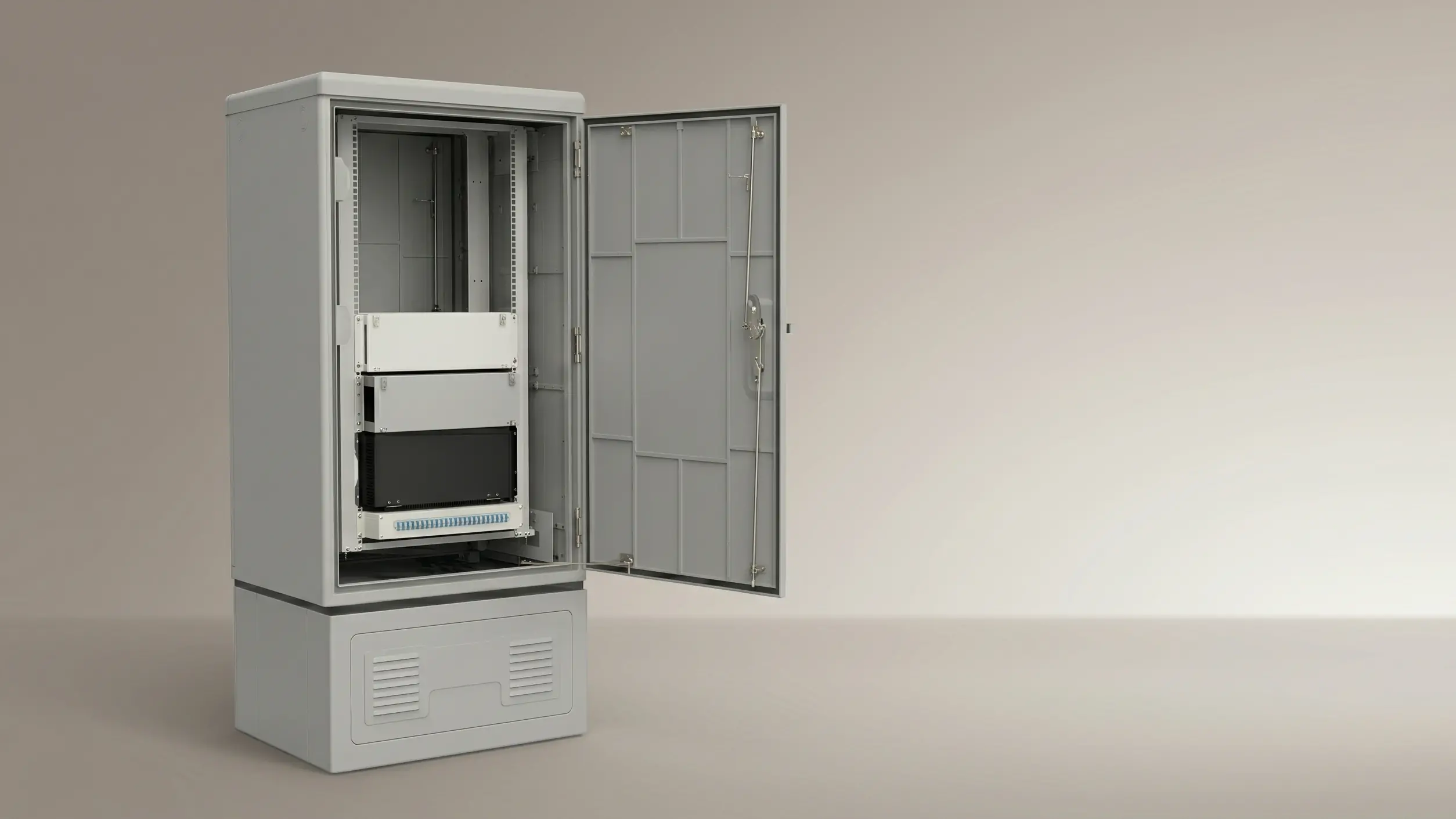
Outdoor Telecom Cabinet Selection Guide
How to choose a weatherproof enclosure for active outdoor equipment.
Read Article →
Fiber Cabinet Materials: SMC, Steel & ABS
How cabinet shell material affects durability and protection.
Read Article →
Outdoor Fiber Termination Box Guide
Selecting an outdoor termination enclosure for exposed fiber runs.
Read Article →