World's Largest Fiber Maker Signals Historic Shift: AI Data Centers Replace Telecom as Primary Growth Engine
By Jergeo Engineering Team | July 19, 2026 · Based on public remarks at WAIC 2026
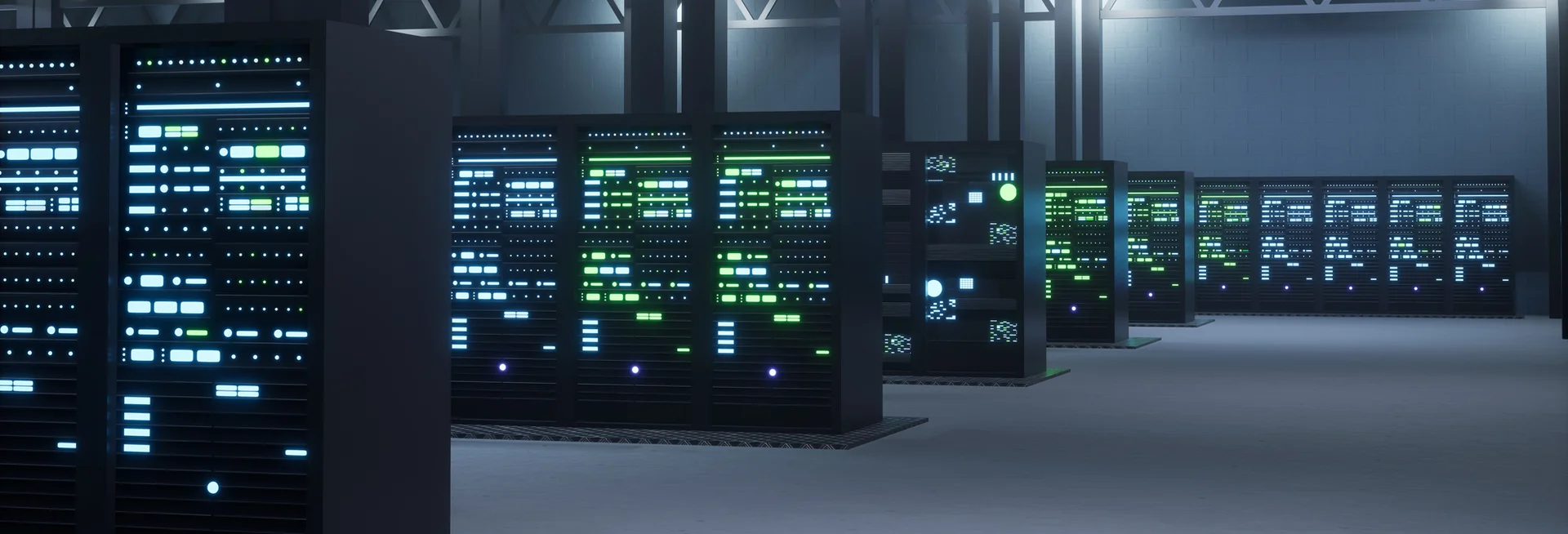
At the 2026 World Artificial Intelligence Conference (WAIC) in Shanghai on July 18, Zhuang Dan, President and Executive Director of YOFC (Yangtze Optical Fibre and Cable) — the world's largest fiber optic manufacturer by market share — delivered a clear message: the fiber optic industry's center of gravity has moved from telecommunications to AI computing infrastructure.
Summary
YOFC's president outlined the fiber industry's shift toward AI infrastructure, signaling increased demand for high-fiber-count distribution frames and cable management in data center builds.
The Numbers Behind the Shift
Zhuang provided specific figures to illustrate the transition. Historically, data communications (Datacom) accounted for less than 10% of global fiber optic cable demand. Based on current trajectories, he projects that by 2030, Datacom will represent over 50% of total optical connectivity demand.
"From less than 10% to 50% is a very significant change," Zhuang stated at the forum titled "Optical Computing + Optical Interconnect: New Paradigms for AI Infrastructure."
He contrasted the long-term growth rates: traditional FTTx (fiber-to-the-home) demand is growing at a compound annual rate of about 2.47%, while AI computing center fiber demand is growing at 20.74% annually — nearly 10 times faster.
Polarization-Maintaining Fiber: The 10x-20x Opportunity
The most striking projection came on polarization-maintaining (PM) fiber. Zhuang stated that the PM fiber market is "extremely hot" right now, and he expects demand to grow 10-to-20-fold over the next 1-2 years. YOFC is working with supply chain partners to expand PM fiber production capacity.
PM fiber has become critical because of CPO (Co-Packaged Optics) architecture. In CPO systems, the laser light source and the silicon photonic chip are housed in separate packages to manage heat density. PM fiber — which locks the polarization state of light — is the irreplaceable connection medium between the external laser source (ELS) and the silicon photonic engine.
As AI cluster architectures scale up, each rack requires significantly more fiber connections. A traditional enterprise data center rack needs 12-48 fiber ports. An AI training cluster rack — connecting hundreds of GPUs via high-speed interconnects — needs 96-192 ports, a 4-to-8-fold increase.
Financial Results Confirm the Trend
YOFC's financial performance reflects this structural shift. In a July 15 filing, the company reported that H1 2026 net profit is expected to reach RMB 2.4–3.0 billion, a year-over-year increase of 711% to 914%, driven primarily by accelerated construction of computing power data centers and growing demand for new fiber optic products.
The company noted that fiber preform rod supply-demand gaps have widened significantly. According to CRU (UK-based commodity research), China's effective fiber preform utilization rate is expected to reach 84.3% in 2026, with capacity approaching full utilization. Multiple companies have announced expansion plans.
What This Means for ODN Equipment Suppliers
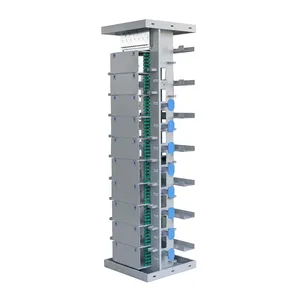
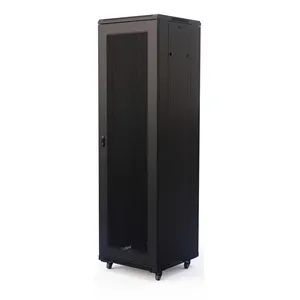
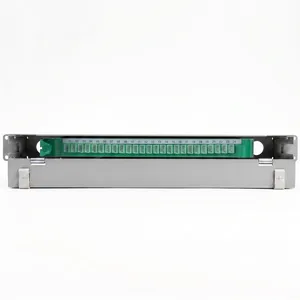
For companies that manufacture fiber distribution equipment — patch panels, ODFs, splice trays, and outdoor cabinets — the demand signal is direct. Higher fiber density per rack means more ports per panel, more modular ODFs per row, and more cable management infrastructure per deployment.
Key implications for ODN procurement:
- Higher port density requirements — Buyers are asking for 96-144 port panels in 1U form factors, up from traditional 12-48 port configurations
- Mixed connector environments — CPO and traditional architectures coexist, requiring panels that support LC, SC, and MPO adapters in the same chassis
- Sliding and rotary access — AI data centers with rear cooling infrastructure need front-access maintenance designs
- Sheet metal demand rises with fiber demand — Unlike fiber itself (whose raw material costs have surged), patch panels and ODFs are sheet metal products, making them relatively cost-stable even as fiber prices spike
The Bottom Line
The fiber optic industry is undergoing a structural transition comparable to the shift from copper to fiber in the 1990s. The growth engine has moved from telecom carriers building FTTH networks to hyperscalers and AI labs building training clusters. For every participant in the ODN supply chain — from fiber manufacturers to sheet metal enclosure producers — the question is no longer whether AI will drive demand, but how quickly the market will scale to meet it.
Related Products
Sources
This article is based on public remarks by Zhuang Dan at the WAIC 2026 forum on July 18, 2026, as reported by Shanghai Securities News (上海证券报), Pengpai News (澎湃新闻), and Xinhua Net (新华网). Financial data from YOFC's H1 2026 earnings preview filed July 15, 2026. Fiber optic standards referenced include ITU-T G.652 (single-mode fiber) and ITU-T G.657 (bending-loss insensitive fiber). Market data from CRU Group optical fiber market report.